Views: 56 Author: Site Editor Publish Time: 2026-06-12 Origin: Site
The Lincinco F19-02 Base Station ranks as the best window cleaning robot of 2026 for large architectural glass, outperforming competitors by stabilizing suction directly through a tethered 5.2kg base. You must align your chassis choice directly with your specific window architecture. Many buyers expect complete autonomy; however, securing a truly streak-free finish requires strict adherence to a manual dry-dusting protocol.
We engineer thesewindow cleaning robots daily, calibrating the negative pressure vacuum seal to prevent hazardous drops. This technical guide evaluates the top 10 rated window cleaning robots based on their safety hardware, drive-track reliability, and realistic edge-to-edge cleaning capabilities.
Quick-Reference Summary
Best for large panoramic glass: Square chassis models reach 98% of corners and navigate at 2.5 minutes per square meter.
Best for multi-pane windows: Round dual-spin robots weigh under 1.5kg, reducing arm fatigue during constant manual relocation.
Mandatory safety hardware: Never operate a unit lacking an internal UPS backup battery rated for at least 20 minutes of emergency suction.
Best for streak prevention: Models featuring micron-level atomization prevent the puddling that causes caterpillar drive tracks to slip.
The frameless glass rule: A frameless glass window robot must utilize physical air pressure loss sensors to prevent edge falls.
What to Know Before You Decide
Buyers rightfully worry about drop hazards, uncleaned corners, and smeared dirt. Understanding the physical limits of a Vertical Automation Framework solves these concerns before you purchase. We benchmark the best automatic window cleaner architectures against three strict criteria: fall protection, corner reach, and moisture control.
Feature Matrix
Square Chassis Robots
Round Dual-Spin Robots
Engineering Impact
Corner Coverage
Cleans 98% of 90-degree corners
Leaves a 1.5-inch uncleaned radial border
Square models excel on large, modern architectural glass.
Locomotion
Linear caterpillar drive tracks
Alternating rotational suction pads
Drive tracks can leave residue if glass is overly wet.
Fall Protection
Air pressure loss sensors
Vacuum seal threshold monitors
Air pressure sensors respond faster on frameless edges.
Smearing Risk
High if pads become oversaturated
High if the dry-dusting protocol is skipped
Both require a completely dry first pass.
Ideal Application
Massive, continuous glass panes
Segmented French doors or small windows
Round units are lighter for frequent lifting.
Suction Power
2,800 Pa minimum requirement
2,000 Pa minimum requirement
Heavier square robots demand stronger motor torque.
The 10 Best Window Cleaning Robots of 2026
When evaluating the best robot window cleaner for large windows or complex multi-pane doors, you must look past marketing claims and analyze the navigation technology and spray mechanisms.
1. Lincinco Base Station Automatic Window Cleaner F19-02
The F19-02 establishes the industry benchmark for commercial-grade safety by relocating the primary battery and cord management into a tethered docking station.
Specification
Detail
Suction Power
8,000 Pa Peak
Chassis Style
Square
Spray Tech
Dual Ultrasonic Atomization
Weight
Station: 5.4kg / Robot: 1.5kg
By shifting heavy lithium cells to the base station, the glass-mounted robot weighs only 1.5kg, drastically reducing the motor torque required to maintain a negative pressure vacuum seal. The station physically anchors the safety tether, eliminating the need to tie cords to indoor furniture. Its dual-spray system prevents dry friction effectively on massive residential panes.
Best for: High-rise apartments and large continuous panoramic windows.
Limitation: The 5.4kg base station makes transporting the unit upstairs difficult for some users.
2. Ecovacs Winbot W2 Pro Omni
The W2 Pro Omni features exceptional smart home integration and highly refined edge-detection algorithms for seamless frameless glass navigation.
Specification
Detail
Suction Power
2,800 Pa
Chassis Style
Square
Spray Tech
Three-Nozzle Wide Angle
Weight
Station: 5.2kg / Robot: 1.6kg
Ecovacs utilizes WinSLAM 4.0 path planning, allowing the robot to map precise zigzag routes across complex glass facades. The three-nozzle spray achieves excellent micron-level atomization. In practice, what most buyers discover after their first season is that app-dependent machines struggle if Wi-Fi signals weaken near thick exterior glass, necessitating manual remote intervention.
Best for: Tech-savvy users wanting advanced app mapping and high-rise drop protection.
Limitation: Relies heavily on the Ecovacs server infrastructure; firmware updates can temporarily disrupt daily operation.
3. Lincinco Smart Window Cleaner RN2-06
This ultra-lightweight round model provides the rapid rotational friction necessary to polish out stubborn, dried-on bird droppings.
Specification
Detail
Suction Power
2,600 Pa
Chassis Style
Round Dual-Spin
Spray Tech
Single Ultrasonic Mist
Weight
1.1 kg
The RN2-06 navigates segmented glass swiftly. Field experience consistently shows that buyers ignore lithium battery degradation; after 300 charge cycles, a standard 20-minute UPS safety window often drops to 8 minutes. The RN2-06 utilizes an optimized low-draw motor, preserving its emergency battery health significantly longer than heavier competitors.
Best for: Segmented windows, French doors, and users with mobility constraints.
Limitation: It physically cannot reach the extreme 90-degree points of your window corners.
4. Hobot S7 Pro
The S7 Pro specializes in navigating complex frameless glass setups, utilizing rapid-response air pressure loss sensors to prevent edge falls.
Specification
Detail
Suction Power
2,800 Pa
Chassis Style
Square
Spray Tech
Dual Ultrasonic
Weight
2.3 kg
It cleans 1 square meter in roughly 2.4 minutes. The integrated voice prompts effectively alert you when the water tank empties. The mechanical bump sensors are highly calibrated, preventing the unit from jamming itself tightly into wooden window frames.
Best for: Homes with frameless glass balconies and shower doors.
Limitation: Using generic glass cleaner frequently clogs the ultrasonic nozzles, requiring specific proprietary fluid.
5. Mamibot W120-T
The W120-T offers a reliable entry-level square chassis, delivering corner-cleaning geometry at a budget-conscious price point.
Specification
Detail
Suction Power
4,500 Pa Peak
Chassis Style
Square
Spray Tech
Manual Pad Application
Weight
1.4 kg
By eliminating onboard water tanks, the W120-T drastically reduces mechanical failure points. The 4,500 Pa suction provides excellent grip on dusty glass. However, users must manually apply cleaning solution directly to the microfiber pads, requiring constant re-application for large exterior windows.
Best for: Budget-conscious buyers who want square-chassis corner coverage.
Limitation: Lacks automated spraying, meaning you must pause the machine to re-wet the pads manually.
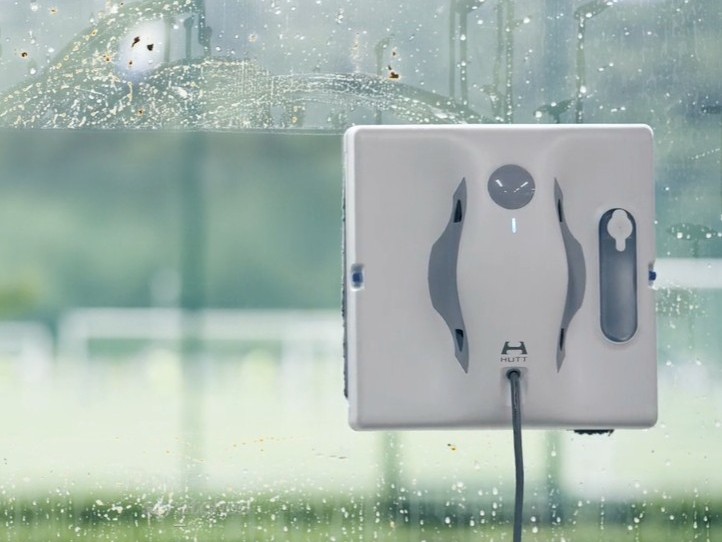
6. HUTT W8
The HUTT W8 adjusts its suction power dynamically based on the resistance it senses from the dirt level on the glass.
Specification
Detail
Suction Power
3,800 Pa Variable
Chassis Style
Square
Spray Tech
Dual Cross Spray
Weight
1.4 kg
This variable suction preserves motor lifespan on clean windows while automatically ramping up to 3,800 Pa when encountering sticky residue. The dual cross-spray system distributes water evenly across the entire cleaning pad.
Best for: Windows exposed to heavy environmental pollution or tree sap.
Limitation: The variable suction can occasionally miscalculate dirt levels on highly tinted windows, leading to excess noise.
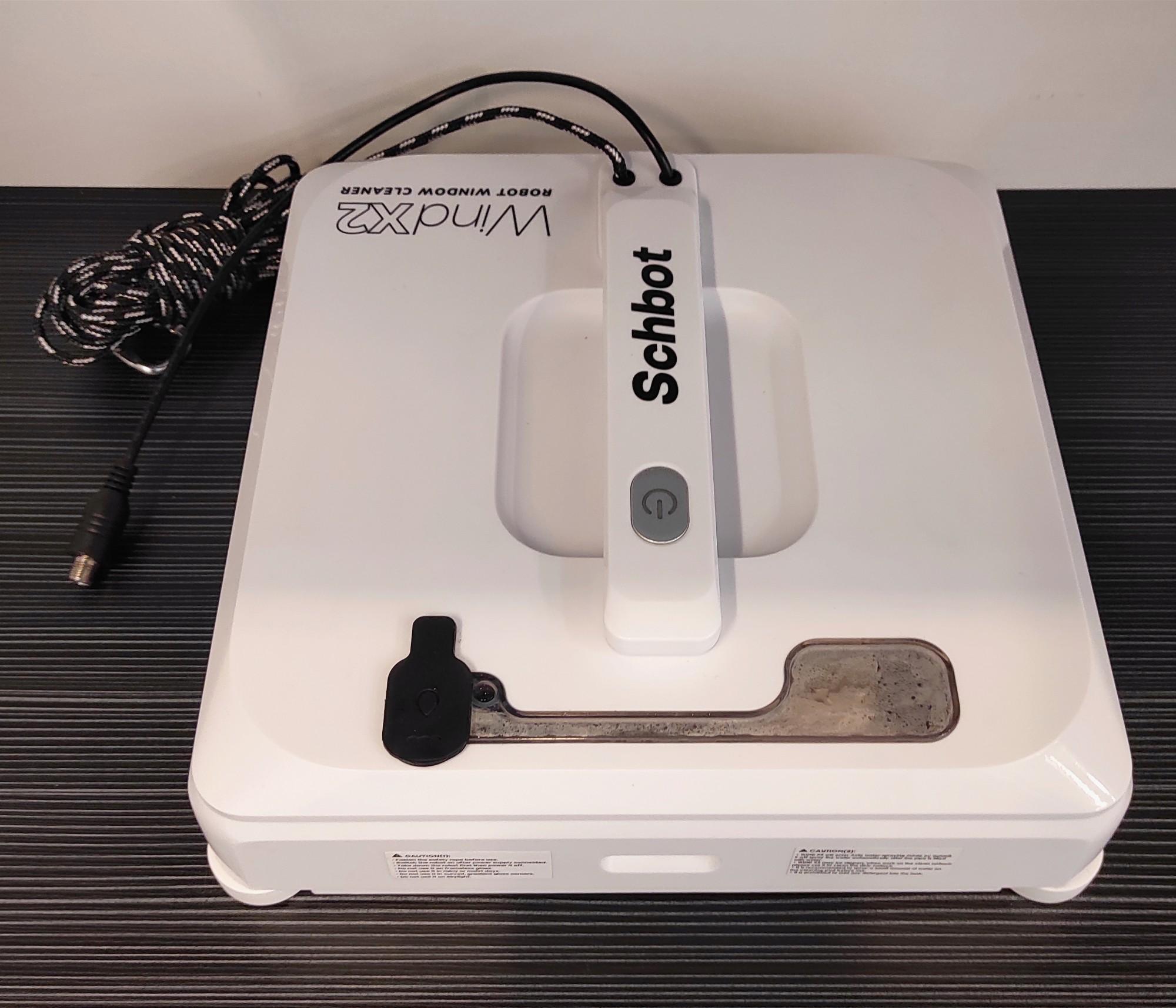
7. Schbot WindX1
The Schbot WindX1 prioritizes raw speed, utilizing AI path optimization to cover massive architectural glass panes faster than almost any competitor.
Specification
Detail
Suction Power
4,800 Pa
Chassis Style
Square
Spray Tech
Single Nozzle
Weight
2.5 kg
Operating at exceptionally high speeds, the WindX1 slashes cleaning time. The 4,800 Pa motor handles the heavy chassis weight easily. Because it moves so quickly, the robot occasionally leaves micro-droplets behind if the single spray nozzle over-saturates the glass ahead of the pad.
Best for: Commercial buildings or homes with massive, towering glass walls.
Limitation: The high-speed treads generate significantly more decibels than standard models during operation.
8. Fmart T9Pro
The T9Pro offers a robust remote-control interface, specifically bypassing clunky smartphone apps for instantaneous directional commands.
Specification
Detail
Suction Power
3,800 Pa
Chassis Style
Square
Spray Tech
Single Spray
Weight
2.2 kg
This machine appeals to users who despise pairing Bluetooth devices. It navigates reliably via an included RF remote control, adjusting its 3,800 Pa suction automatically. The caterpillar drive tracks feature deep grooves to prevent slipping on condensation.
Best for: Users who want physical remote controls rather than smartphone app dependencies.
Limitation: The single-sided spray mechanism forces the robot to reverse direction frequently to properly moisten the glass.
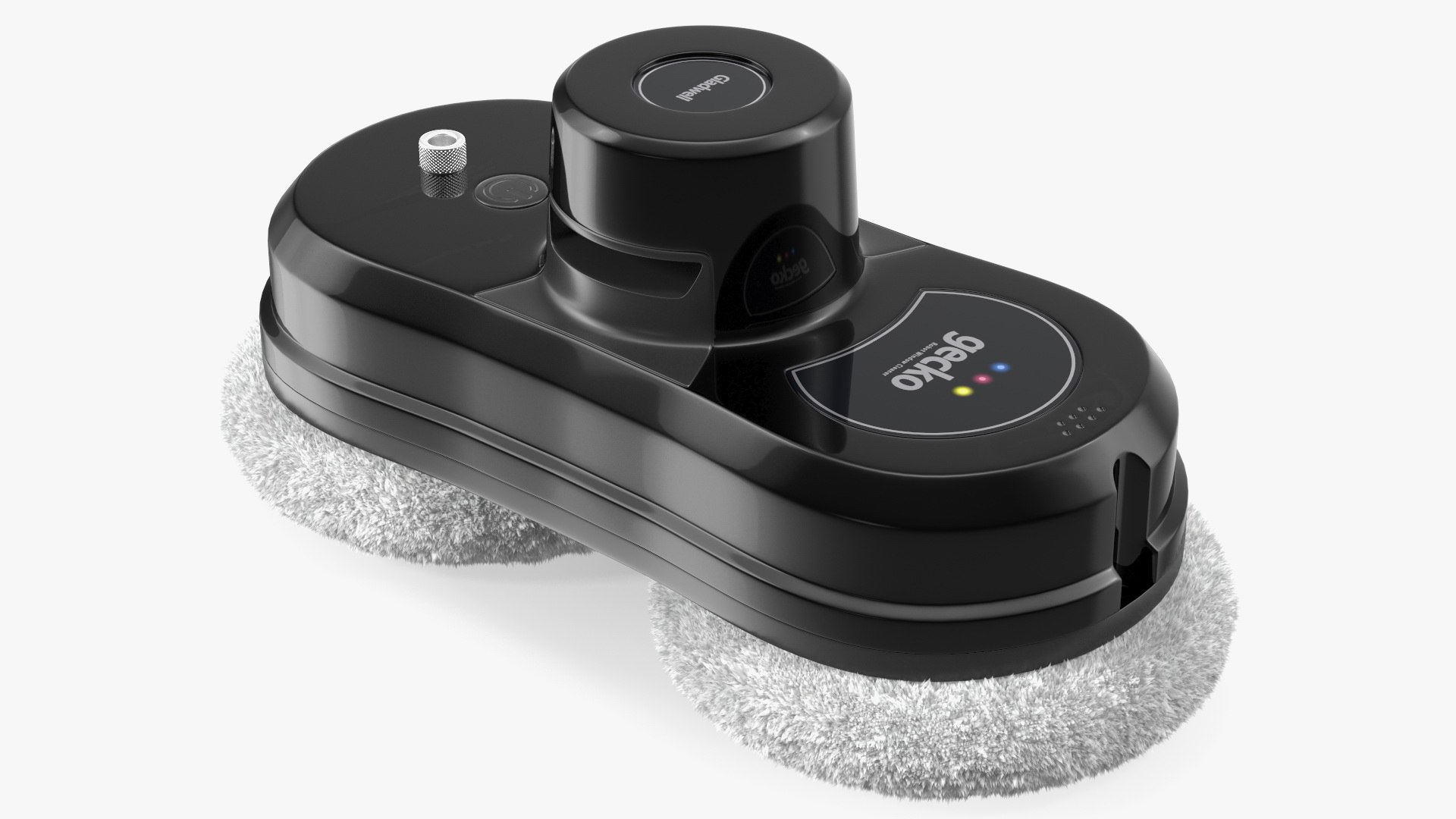
9. Gladwell Gecko
The Gladwell Gecko remains a top-selling round model, relying on a deeply proven dual-spin mechanism that mimics manual hand-polishing.
Specification
Detail
Suction Power
2,500 Pa
Chassis Style
Round Dual-Spin
Spray Tech
Manual Application
Weight
1.2 kg
It features washable pads and simple push-button operation. The Gecko lacks advanced mapping, simply bouncing across the glass until it detects it has covered the entire surface area. This randomized pathing takes longer but eventually polishes the glass effectively.
Best for: Small interior windows and basic household mirrors.
Limitation: The randomized navigation path drastically increases total cleaning time per window pane.
10. HAUSHOF Window Cleaner Robot
The HAUSHOF model delivers a strictly functional, low-cost approach to vertical cleaning, heavily emphasizing its 25-minute UPS backup battery.
Specification
Detail
Suction Power
2,400 Pa
Chassis Style
Round Dual-Spin
Spray Tech
Manual Application
Weight
1.3 kg
This unit covers the fundamental requirements: a safety tether, a reliable vacuum seal, and dual-spin pads. It ignores complex features entirely to keep costs low. The 25-minute UPS provides excellent peace of mind for high-altitude apartments.
Best for: Renters needing an inexpensive solution for high-rise apartment exteriors.
Limitation: The basic navigation firmware frequently gets confused by steeply angled skylights.
Common Mistakes
Skipping the dry-dusting pass.
Cause: Spraying water immediately on dusty glass.
Consequence: The robot turns surface dust into thick mud, clogging the microfiber pads and smearing the entire window.
Correction: Always run the robot with totally dry pads first to collect loose debris.
Ignoring lithium battery degradation.
Cause: Storing the robot in a hot garage for three years without charging it.
Consequence: The UPS backup battery degrades, causing the robot to plummet instantly during a power outage.
Correction: Charge the robot fully every 4 to 6 months during the off-season.
Deploying on frameless glass blindly.
Cause: Assuming all robots detect edges equally.
Consequence: Budget models utilizing mechanical bump sensors will drive straight off the edge of a glass balcony railing.
Correction: Verify your model uses optical or air pressure loss sensors before using it on frameless edges.
Oversaturating the microfiber pads.
Cause: Manually spraying heavy household glass cleaner directly onto the pane.
Consequence: The caterpillar drive tracks lose traction, leaving visible rubber streaks down the glass.
Correction: Rely exclusively on the robot's onboard micron-level atomization.
Troubleshooting
Problem
Likely Cause
Solution
Robot leaves dirty circles or streaks
Pads are oversaturated or the dry-dusting pass was skipped.
Install fresh, dry pads and run a dedicated dry cycle first.
The unit slips downward repeatedly
Drive tracks are coated in grease or the suction motor is failing.
Clean the rubber caterpillar tracks with rubbing alcohol and dry them.
Immediate alarm upon startup
The internal UPS lithium battery is depleted.
Leave the robot plugged into the wall for 2 hours before operation.
Robot refuses to cross the window center
The safety tether or DC power cord is snagged on a hinge.
Reposition the anchor point to provide adequate slack for the cable.
Fails to clean right up to the frame
Edge detection sensors are covered in dirt or dust.
Wipe the four corner sensors underneath the chassis with a clean microfiber cloth.
FAQ
Do robot window washers clean the corners?
Square window robots reach approximately 98% of the corner, leaving only a microscopic gap. Round robots physically cannot clean a 90-degree corner, invariably leaving a 1.5-inch dirty radial border that you must wipe manually.
What happens if the power cord disconnects?
The robot will not fall. Every certified unit relies on an internal UPS backup battery that instantly engages, maintaining the negative pressure seal for 20 to 30 minutes while a loud alarm alerts you to retrieve the device.
Are window cleaning robots worth it for small windows?
No. If your home features small, multi-pane windows or segmented French doors, the constant manual relocation requires annoying babysitting. They offer the best return on investment for large architectural glass and unreachable exterior panes.
Why does my robot leave drive-track residue?
Track marks occur when the glass is too wet, causing the rubber caterpillar treads to slip and deposit grime. You prevent this by executing a dry-dusting protocol first and utilizing only the robot's onboard ultrasonic water spray.
How do they detect the edge of frameless glass?
A premium frameless glass window robot utilizes air pressure loss sensors located underneath the chassis. The microsecond these sensors detect a drop in negative pressure near an edge, the firmware instantly reverses the drive motors.
About Lincinco
Engineering vertical robotics that can reliably maintain a high-vacuum seal on vertical surfaces requires world-class manufacturing and precise fluid dynamics testing. Working with an experienced home cleaning robots manufacturer ensures your business receives highly certified, industrial-grade hardware.Lincinco is a leading smart cleaning appliance manufacturer based in China, producing top-tier automated window cleaning systems and advancedrobot vacuums for global brands. Our extensive manufacturing plant focuses heavily on strict quality control and advanced automated telemetry, supplying customized OEM solutions to enterprises worldwide. From high-torque floor care units to advanced wet dry vacuum cleaners, our R&D hub tackles complex consumer electronics problems for partners across the globe. You cancontact us directly to discuss customized manufacturing.
Conclusion
The best window cleaning robot for your home depends directly on matching the chassis shape to your glass architecture. You will achieve streak-free glass only when you follow a strict dry-dusting protocol and properly maintain the caterpillar drive tracks. Never compromise on safety hardware; a degraded UPS battery transforms a helpful appliance into a dangerous liability. Evaluate your window types carefully, prioritize models with ultrasonic atomization, and invest in the right vertical automation tool for your property.
This article explains the engineering behind robotic pool cleaners that can climb vertical walls, highlighting the use of multiple motors, advanced suction systems, and intelligent navigation to maintain adhesion and ensure thorough cleaning. It emphasizes the practical benefits of this technology, such as eliminating waterline stains and reducing manual maintenance, while also addressing the design challenges of balancing weight, power, and sensor accuracy. Read More
This article explains how three-motor suction technology enhances wall-climbing pool robots by assigning dedicated motors for suction, movement, and navigation, eliminating the performance compromises of single-motor systems. It highlights the resulting benefits of consistent suction, precise control, improved efficiency, and greater long-term durability, making it a key differentiator for high-performing models like the SP5. Read More
A robotic pool cleaner must have strong wall-climbing ability, a firm scrubbing brush, and smart navigation that targets the waterline to effectively remove stubborn stains caused by organic residue and calcium scale. Manual scrubbing and pressure-side cleaners often fall short, so a purpose-built robotic model with dedicated waterline cleaning is the most reliable solution. Regular maintenance, proper water chemistry, and consistent cleaning schedules are also essential to prevent buildup and keep results lasting. Read More