The gleaming glass facades of modern skyscrapers and the clean windows of a suburban home share a common, often overlooked challenge: the significant and recurring expense of maintenance. For decades, the primary solution has been manual labor—a method that is not only time-consuming and dangerous but also increasingly costly.
Automatic window cleaning robots and drones represent a paradigm shift in building maintenance, offering substantial cost savings through reduced labor expenses, increased operational efficiency, and enhanced worker safety. These technologies are not merely gadgets but are sophisticated financial tools that can dramatically lower the total cost of ownership for building maintenance.
This article will provide a detailed financial breakdown of how automation cuts costs, explore the hidden expenses of traditional methods, and guide you through calculating the return on investment for your property, empowering you to make a financially sound decision for your home or business.
The True Cost of Traditional Window Cleaning
To fully appreciate the value of automatic window cleaners, one must first understand the extensive financial burden of conventional methods. The direct costs, while substantial, are only the tip of the iceberg; it is the associated indirect expenses that truly inflate the budget over time.
Labor: The Largest and Most Volatile Expense
Manual window cleaning is an intensely labor-driven industry. For high-rise buildings, this process involves teams of professionals using rope access (rappelling) systems, scaffolding, or powered access platforms like cherry pickers. The labor cost encompasses not just the cleaning time, but also the extensive time required for setup and takedown of safety equipment. A survey by Fraunhofer IPA highlighted that personnel costs can account for up to 70% of the total expenditure for cleaning building facades and windows.
This percentage is even more significant when considering the specialized training and higher wages commanded by workers performing dangerous high-altitude tasks. Furthermore, labor costs are subject to market fluctuations, insurance premiums, and the risk of worker shortages, making them a volatile and unpredictable budget line.
The Heavy Burden of Insurance and Liability
The inherent danger of manual window cleaning, particularly on skyscrapers, results in exorbitant insurance premiums. Companies must carry extensive liability insurance and workers' compensation insurance to protect against the potentially catastrophic costs of an accident. These policies are priced based on the perceived risk, and sending humans over the side of a 50-story building represents one of the highest risk categories. These insurance costs are, of course, passed directly to the property owner or manager. In contrast, robotic systems, once deployed, eliminate the need for human workers to be in hazardous situations, thereby drastically reducing the associated insurance overhead.
Inefficiency and Operational Disruption
The efficiency of manual cleaning is often low. Workers must move slowly and methodically to ensure safety, and their physical endurance limits continuous work periods. Weather conditions frequently cause delays, leading to scheduling backlogs and extended project timelines. Moreover, traditional cleaning can be disruptive to building occupants.
Deploying swing stages outside windows can block views and natural light, while the presence of cleaners can be a distraction in office settings. In some cases, interior workspaces near the windows may need to be temporarily vacated for safety reasons, further impacting business operations. One analysis noted that manual methods for cleaning a structure like the Burj Khalifa are not only labor-intensive and time-consuming but also exceptionally costly.
How Automatic Window Cleaners Drive Down Costs?
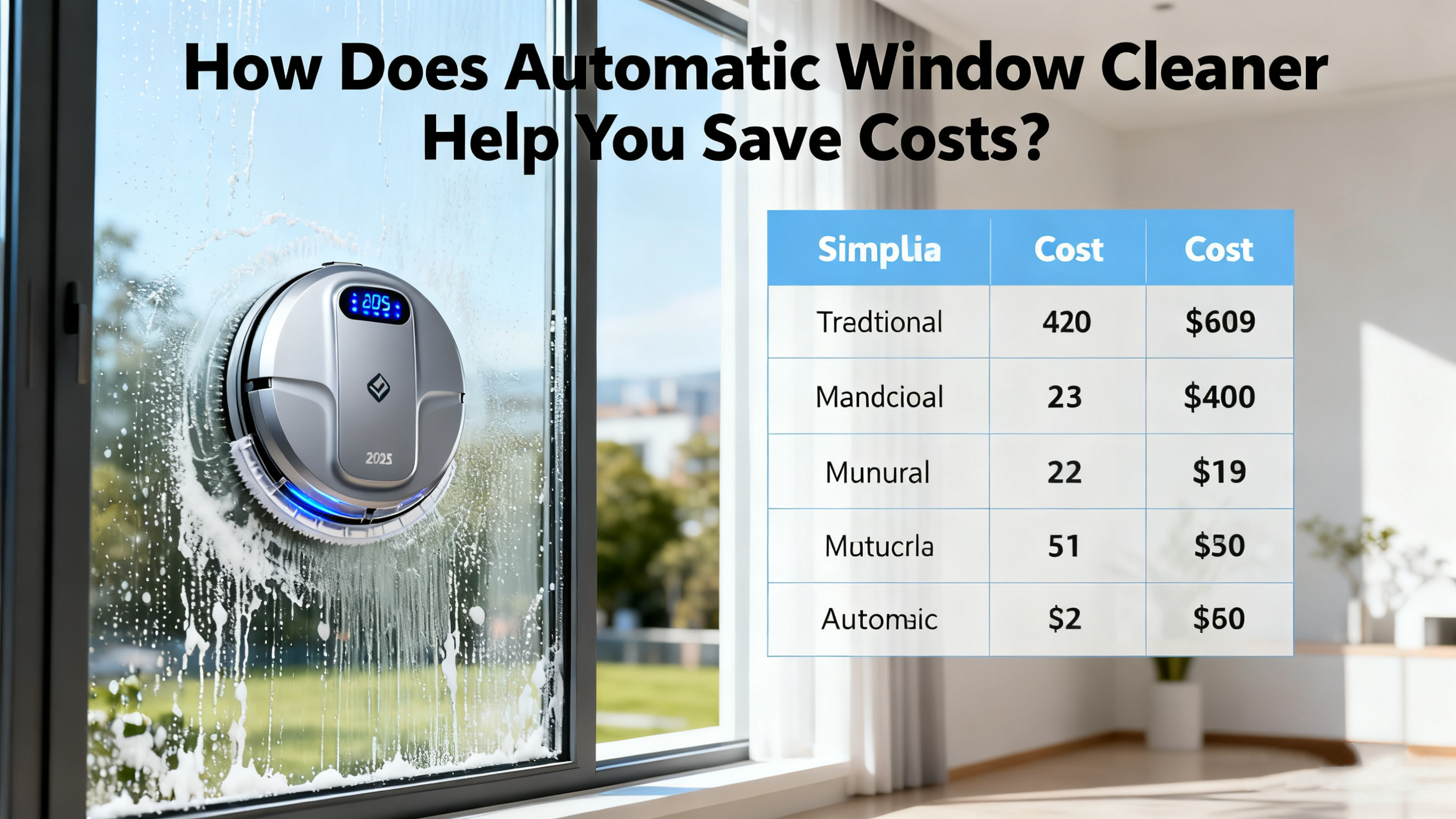
Automatic window cleaners attack the cost structure of traditional methods on multiple fronts. They replace variable, unpredictable expenses with fixed, manageable capital and operational costs, leading to profound long-term savings.
Slashing Labor and Insurance Premiums
The most immediate and dramatic saving comes from a radical reduction in labor requirements. A single operator can deploy and monitor multiple robots or drones simultaneously, effectively multiplying the workforce without multiplying the payroll.
Labor Reduction: A field test of the F19-02 window cleaning robot, which found its prototype needed more development, was ultimately aimed at achieving an 80% reduction in costs compared to current basic methods. This figure aligns with the efficiency gains reported by other systems. Drones, like the SkyBot, can operate entirely autonomously, requiring only a single ground-based supervisor.
Insurance Impact: By removing humans from the most dangerous aspects of the job, property owners can see a direct reduction in their insurance liabilities. The risk profile of the building's maintenance program is fundamentally altered, resulting in lower property and liability insurance premiums.
Unmatched Efficiency and Speed
Robots do not get tired, do not need breaks, and can operate continuously within their battery life limits. This leads to a much faster cleaning cycle.
Faster Cleaning Cycles: The SkyBot drone was shown to potentially shorten the cleaning cycle for a massive structure like the Burj Khalifa to around 40 days, a significant improvement over traditional methods.
Increased Scale and Coverage: Unlike human teams that may work standard hours, robots can be deployed for longer periods or during off-hours to minimize disruption. Their ability to work faster and longer translates directly into completing jobs more quickly, allowing a building to be cleaned more frequently or for the maintenance company to service more clients with the same number of operators.
![How Does Automatic Window Cleaner Help You Save Costs?]()
Durability and Long-Term Investment Value
While the initial purchase price of an automatic window cleaner can be significant, it must be viewed as a capital investment rather than a recurring expense. A high-quality robot is a durable asset that provides value for many years.
One-Time Investment vs. Recurring Fees: Instead of paying perpetual service fees to a cleaning company, a property owner invests in a device that, after the payback period, dramatically reduces the marginal cost of each subsequent cleaning. The "cost per clean" plummets over the lifespan of the equipment.
Long-Term Reliability: Manufacturers like LINCINCO, with their experience in B2B wholesale and factory production, design robots for commercial endurance. This robust build quality ensures the system remains a valuable part of the maintenance fleet for years, maximizing the return on investment.
A Detailed Financial Breakdown: ROI Analysis
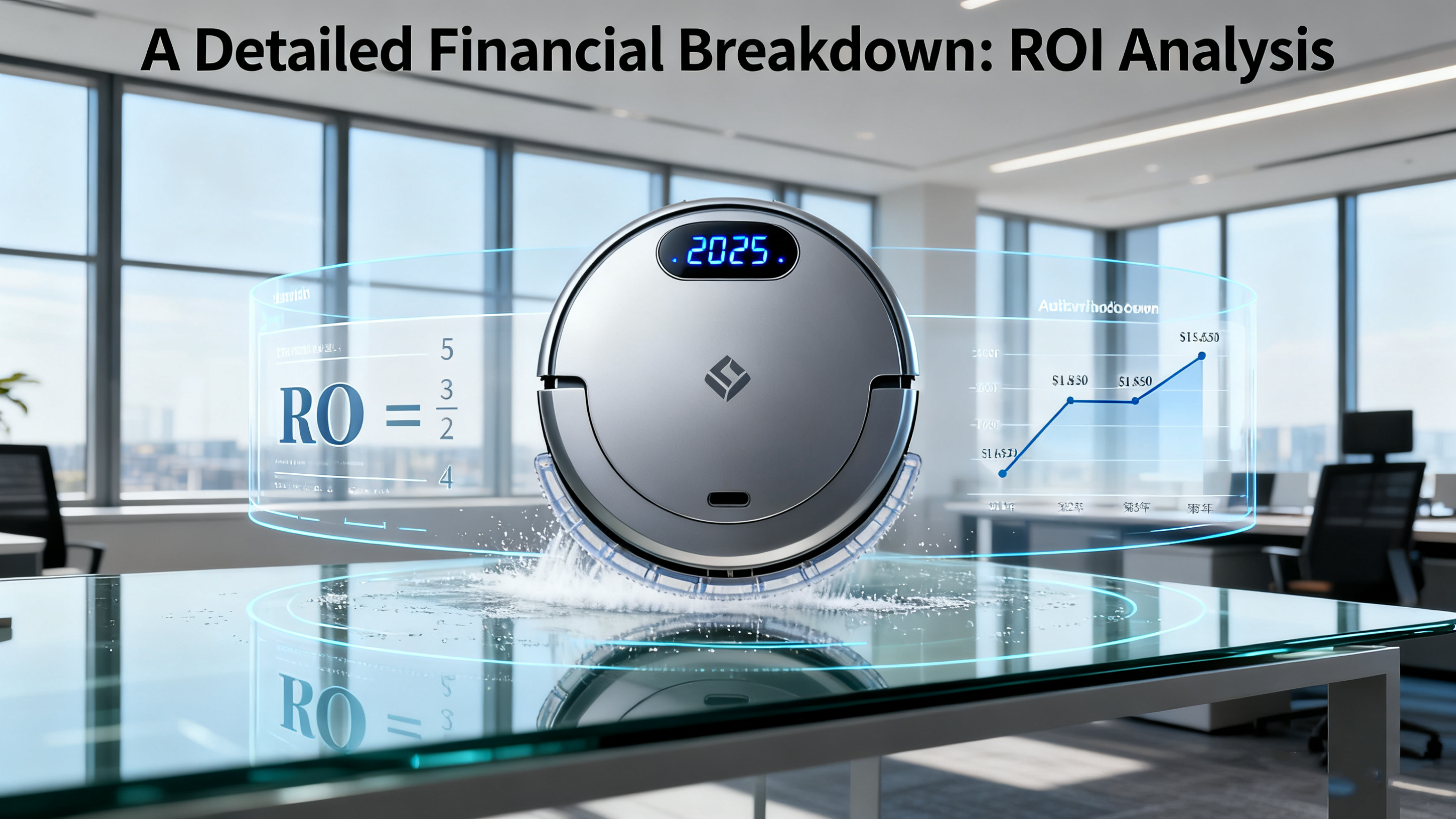
To move from conceptual benefits to hard numbers, a detailed Return on Investment (ROI) analysis is essential. The following table provides a simplified comparison, illustrating the financial shift from traditional to automated cleaning over five years.
| Cost Factor | Traditional Manual Cleaning (5 Years) | Automatic Window Cleaner (5 Years) | Notes |
| Initial Capital Outlay | Minimal to None | $2,000 - $15,000+ | One-time cost for the robot/drone. Higher end for commercial-grade systems. |
| Labor Costs | Very High ($11,000 per job cited for some buildings ) | Low (Single Operator) | One operator can manage multiple units. Massive savings on specialized labor. |
| Insurance & Liability | High (Due to high-risk work) | Significantly Reduced | Risk transfer from humans to machines lowers premiums. |
| Operational Efficiency | Lower (Subject to fatigue, weather) | High (Faster, continuous operation) | Robots like LINCINCO F19-02 can reduce operational costs by 47%. |
| Maintenance & Consumables | N/A (Included in service) | Moderate (Pads, parts, software) | A predictable, manageable operating expense. |
| Total Projected Cost (5y) | Extremely High | Substantially Lower | Positive ROI is typically in 1-3 years for commercial properties. |
Calculating Your Payback Period
The payback period is the time it takes for the savings from an investment to equal the initial cost. Here is a simplified formula:
Payback Period (in years) = Total Initial Investment / Annual Cost Savings
Total Initial Investment: This includes the purchase price of the robot, any necessary accessories, and initial training.
Annual Cost Savings: Calculate this by subtracting your annual cost of automatic cleaning from your previous annual cost of manual cleaning.
Example Calculation:
Imagine a commercial building that currently spends $10,000 annually on manual window cleaning services. The property manager invests $15,000 in a robust automatic cleaning system.
New Annual Cost: $1,500 (for operator time, consumables, and minor maintenance).
Annual Savings: $10,000 (old cost) - $1,500 (new cost) = $8,500.
Payback Period: $15,000 / $8,500 ≈ 1.76 years.
In this scenario, the investment pays for itself in under two years. Every cleaning cycle after the two-year mark generates pure savings, directly improving the property's bottom line. This aligns with the broader industry potential; for instance, drone-based cleaning can achieve a 47% reduction in operational costs.
![A Detailed Financial Breakdown: ROI Analysis]()
Beyond Direct Savings: The Indirect Financial Benefits
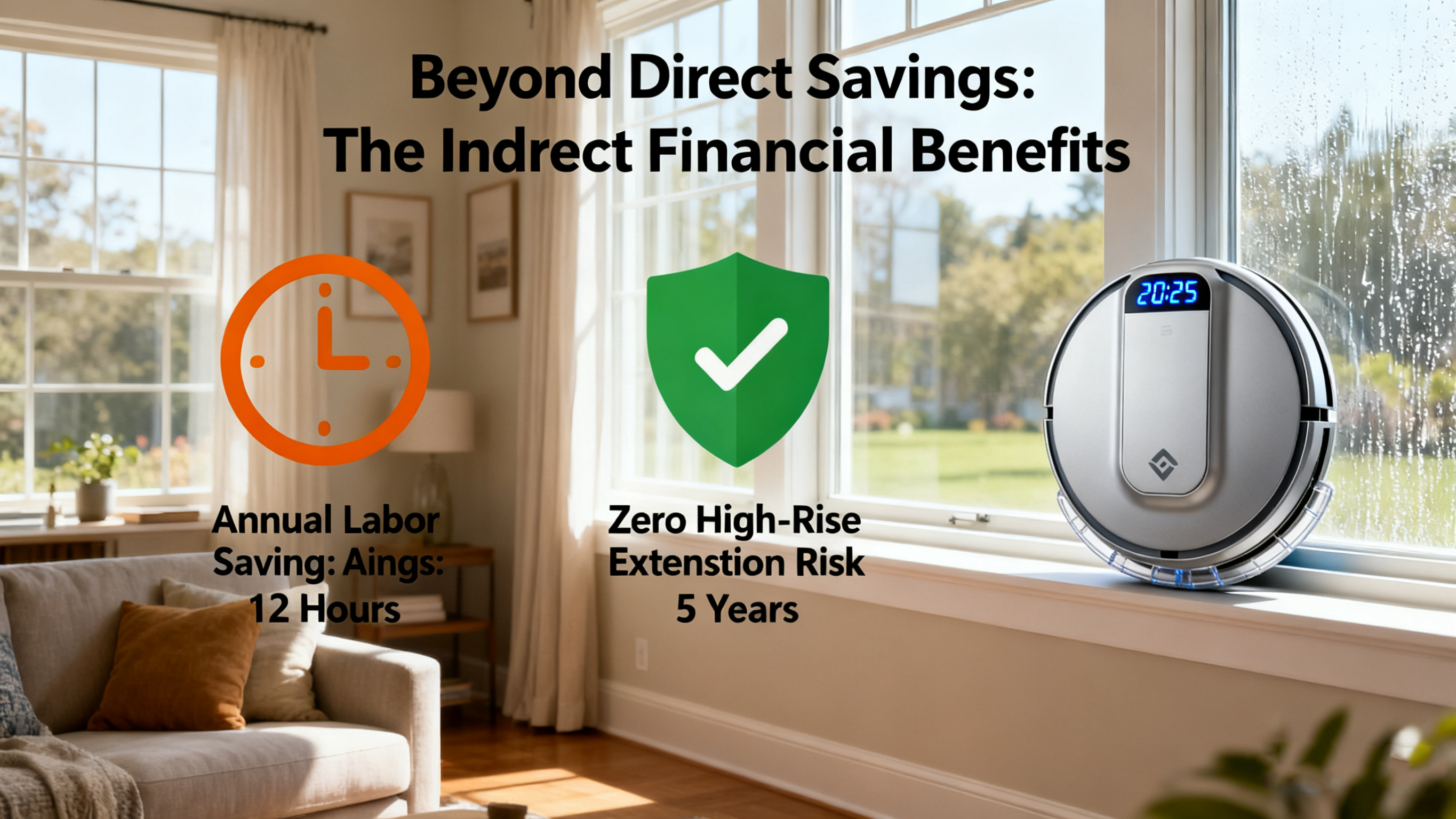
The economic advantages of automatic window cleaners extend far beyond direct labor and insurance savings. They create a cascade of indirect benefits that contribute significantly to a property's financial health and operational smoothness.
Enhanced Worker Safety and Risk Mitigation
This is arguably the most critical indirect benefit. According to the project description for the Wall-R robot, a key objective is "to guarantee the safety of people working on a high outside wall". By transferring the risk from humans to machines, companies can:
Virtually Eliminate Fall Hazards: There are no human lives on the line when a robot is cleaning a 100-story window.
Reduce Regulatory Scrutiny: Stringent occupational safety regulations (like OSHA in the U.S.) govern high-altitude work. Robotic cleaning simplifies compliance.
Protect Brand Reputation: The financial and reputational damage from a serious workplace accident can be immense. Automation mitigates this existential risk.
Minimizing Business and Occupant Disruption
Automatic cleaners, especially those that are compact and quiet, can often operate with minimal disruption. This "invisible maintenance" allows businesses to function normally without the visual and auditory distraction of cleaning crews outside the windows. There's no need to relocate employees or block off areas, preserving productivity and tenant satisfaction. This is a stark contrast to the disruptive process of setting up swing stages or scaffolding, a point highlighted as a problem in traditional cleaning.
Water, Energy, and Cleaning Solution Efficiency
Many modern automatic cleaners are designed with sustainability and efficiency in mind. They often use precise, computer-controlled systems to apply cleaning solutions and water.
Reduced Water Consumption: One provider of drone-based cleaning systems claims their method uses as little as one-third of the water compared to traditional methods.
Optimized Chemical Use: Targeted spray systems ensure that just the right amount of cleaning solution is used, reducing waste and chemical runoff.
Energy Savings: Some connected systems can integrate with building management systems to optimize cleaning schedules based on weather and occupancy, avoiding unnecessary cycles.
![Beyond Direct Savings: The Indirect Financial Benefits]()
Choosing the Right System for Your Budget and Needs
Selecting the appropriate automatic window cleaner is crucial for maximizing your cost savings. The "best" system is the one that most efficiently solves your specific cleaning challenges at the optimal price point.
For Residential and Small-Scale Users
Homeowners and small businesses typically have lower windows or less complex surfaces. The financial calculation here revolves around avoiding recurring professional fees and the value of personal time and safety.
Consumer-Grade Robots: Devices like the LINCINCO F19-02 are ideal for standard residential windows. The investment is relatively low, and the payback period is achieved by eliminating the cost of hiring a cleaning service, which can be expensive and infrequent. For a homeowner who pays $150-$300 per cleaning multiple times a year, the robot can pay for itself in a year or two.
Value Analysis: The primary consideration is compatibility with your window types (glass thickness, frame presence) and the convenience features offered, such as automatic cleaning cycles and safety ropes.
For Commercial and Industrial-Scale Applications
For high-rise buildings, large facades, and industrial complexes, the decision matrix becomes more complex, focusing on scalability, integration, and total cost of ownership.
High-Rise Drones (e.g., SkyBot): As studied for the Burj Khalifa, drones are exceptionally well-suited for the most challenging skyscrapers. They require no permanent infrastructure on the building and can access complex geometries that are impossible for other methods. The ROI is achieved through massive labor savings and the ability to clean more frequently without a proportional cost increase.
Facade-Climbing Robots: Systems like the Wall-R robot are designed for "all straight walls" and do not require modifications to the property. These are excellent for large, flat surfaces and offer a strong balance of performance and operational control.
Permanent Automated Systems: Some buildings are now being designed with built-in cleaning infrastructure, such as tracks or rails. These systems offer the ultimate in convenience and efficiency, but require a significant upfront investment and architectural integration.
Conclusion: A Clear Financial Case for Automation
The evidence for adopting automatic window cleaning technology is overwhelmingly financial. While the sleek, high-tech operation captures the imagination, the true revolution is happening on the balance sheet. These systems are not a mere replacement for manual labor; they are a fundamental improvement that delivers lower total costs, enhanced safety, superior operational efficiency, and reduced risk.
The initial investment, while not insignificant, is quickly offset by the dramatic reduction in recurring labor expenses, insurance premiums, and operational disruptions. The ROI model is clear and compelling, with payback periods often falling within just a few years for commercial properties. For homeowners, the combination of financial savings, convenience, and eliminated risk creates a powerful value proposition.
As building designs continue to evolve and labor costs rise, the economic argument for automation will only grow stronger. Investing in an automatic window cleaner is no longer a speculative purchase for early adopters; it is a sound, strategic financial decision for any property owner or manager committed to fiscal responsibility, safety, and operational excellence.