The Ultimate Guide: How to Choose the Perfect Window Cleaning Robot for Your Home
Choosing the best window cleaning robot involves assessing key factors like its shape (square for corners, round for speed), cleaning mechanism (rotating pads vs. static), navigation technology for full coverage, power source (corded for continuous power, cordless for flexibility), and crucial safety features like a backup battery and safety tether. This guide will walk you through every critical aspect, empowering you to select a device that perfectly matches your home's needs, ensuring sparkling, streak-free windows with minimal effort.
![How to choose a window cleaning robot?]()
Key Factors to Consider Before Buying a Window Cleaning Robot
An automated window cleaner is a significant investment in your home's maintenance. To ensure you get the best value and performance, it's essential to move beyond marketing hype and analyze the core technologies that define a great robot. Here’s a detailed breakdown of what you should look for.
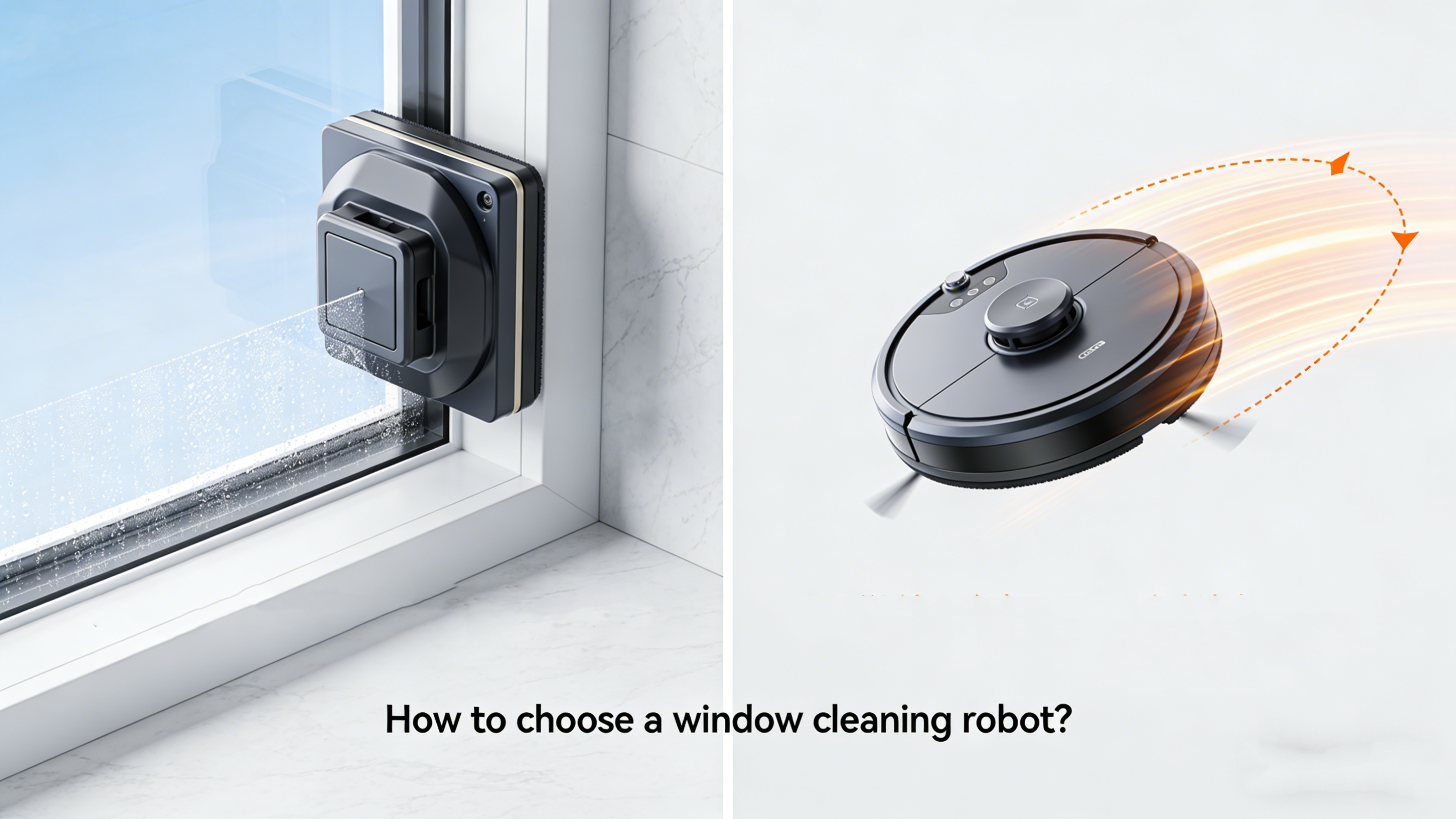
Shape and Design: Square vs. Round
The physical shape of the robot is one of the most immediate differentiators and directly impacts its cleaning performance, especially concerning edges and corners. There is no single "best" shape; the ideal choice depends on the type of windows you have.
Square-shaped robots are specifically engineered to tackle corners. Their design allows them to get much closer to the 90-degree angles of a window frame, a common pain point for their round counterparts. If your home has many traditional, framed windows, a square model with advanced corner-cleaning technology will likely provide a more thorough clean, reducing the need for manual touch-ups. They excel at providing edge-to-edge coverage on standard window panes.
Round-shaped robots, on the other hand, typically feature two spinning microfiber pads. This dual-rotation system often results in a more vigorous scrubbing and polishing action, which can be highly effective on general surface grime. Their movement can be faster and more fluid on large, open panes of glass. While they struggle to reach the absolute corner, their polishing effect across the main surface area is often superior. They are an excellent choice for large picture windows, sliding glass doors, or surfaces where corner precision is less critical than overall surface shine.
Cleaning Mechanism: How Does It Actually Clean?
Beyond shape, the method the robot uses to apply pressure and wipe away dirt is paramount. Look for systems that offer more than a simple wipe. The most effective models use a multi-stage cleaning process.
Many modern robots utilize a combination of a vibrating mop or oscillating pad and powerful suction. The vibration helps to dislodge stubborn dirt, bird droppings, and grime, mimicking a manual scrubbing motion. The powerful vacuum suction not only holds the robot securely to the glass but also helps lift away loosened debris. Other models rely on the aforementioned dual-spinning pads, which create a cyclonic cleaning action that buffs the glass as it cleans.
Additionally, consider robots with an ultrasonic water spray system. These models atomize water into a fine mist that dissolves dirt without causing drips or streaks. This is far superior to models that require you to manually wet the pads, as the automated spray ensures an even, consistent application of moisture throughout the cleaning cycle, leading to a much better, streak-free finish.
Navigation and Pathfinding Technology
What good is a robot if it misses spots or aimlessly wanders? Intelligent navigation is the brain of the operation. Basic models might just move in a random pattern, which is inefficient and can leave areas untouched. High-quality window cleaning robots use sophisticated AI to map the window and plan an optimal cleaning path.
Look for terms like AI-powered path planning, intelligent route planning, or SLAM (Simultaneous Localization and Mapping) technology. These systems use a variety of sensors (such as laser or gyroscope sensors) to detect the window's edges and calculate its size and shape. The robot then follows a systematic Z-shaped or N-shaped path to ensure it covers every square inch of the glass. This efficiency not only guarantees a complete clean but also gets the job done faster.
Power Source: Corded vs. Cordless
This is a crucial decision based on convenience versus performance. Corded models plug into a wall outlet and offer the significant advantage of unlimited runtime. You never have to worry about a battery dying mid-clean, making them ideal for homes with many or very large windows. The downside is managing the cord, which can sometimes get tangled or limit reach if you don't have a conveniently located outlet.
Cordless (battery-powered) models offer maximum flexibility. There's no cord to manage, making them incredibly easy to move from one window to another, including those far from a power source. However, you are limited by battery life, which typically ranges from 20 to 50 minutes. This might be sufficient for a few windows but could require multiple recharge cycles to clean an entire house, which can be time-consuming.
Safety Features: The Non-Negotiables
When you have a device attached to the outside of a second-story window, safety is paramount. Do not compromise on these features. The most critical safety component is a UPS (Uninterruptible Power Supply), which is an internal backup battery. If your home's power unexpectedly cuts out, the UPS provides enough power (usually for 20-30 minutes) for the robot to remain attached to the window while it beeps an alarm, giving you time to retrieve it safely.
Equally important is a high-strength safety rope or tether. This rope should be securely anchored to a solid point inside your home (like a heavy piece of furniture or a dedicated anchor point). In the unlikely event of both a power failure and a UPS malfunction, or a loss of suction for any other reason, the safety tether is the final line of defense that prevents the expensive robot from plummeting to the ground and potentially causing injury or damage. Never operate a window cleaning robot on an external or high-rise window without the safety tether properly secured.
Control and Connectivity: Remote vs. App
How you interact with your robot affects its ease of use. Most models come with a dedicated infrared remote control. This allows you to start, stop, and manually direct the robot, which is useful for spot-cleaning a specific area. It's a simple and reliable method of control.
More advanced models offer smartphone app connectivity via Bluetooth or Wi-Fi. An app can provide more detailed control, including selecting different cleaning modes, receiving notifications when a window is finished, and getting firmware updates that can improve the robot's performance over time. If you appreciate smart home integration and having advanced controls at your fingertips, an app-controlled model is the way to go.
Suitability for Your Windows: Framed, Frameless, and More
Not all windows are created equal. Your chosen robot needs to be able to handle the specific types of surfaces in your home. Most robots use sensors to detect window frames and reverse direction. However, if you have frameless windows, glass balustrades, or shower doors, you need a model with advanced edge-detection sensors that can identify the edge of the glass itself and prevent the robot from moving past it and losing suction.
Also, consider the thickness of your glass. While most robots work on single and double-paned windows, you should always check the manufacturer's specifications. Some models may also be suitable for slightly tilted windows or skylights, but this is a specialized feature. Finally, check the minimum and maximum window sizes the robot can handle to ensure it's compatible with your panes.
Noise Level and Maintenance
A window cleaning robot is essentially a vacuum cleaner stuck to your window, so it will make noise. The noise level, measured in decibels (dB), can vary between models. A quieter model (around 60-65 dB) will be much less disruptive than a louder one (70-75+ dB). If you plan to be home while the robot is working, a lower decibel rating is a significant quality-of-life feature.
Maintenance is another practical consideration. How easy is it to clean the robot itself? The primary maintenance task will be washing the microfiber cleaning pads. Most are machine-washable and reusable. It’s a good idea to choose a model that comes with multiple sets of pads, so you can always have a clean, dry pair ready for the next job.
![The window cleaning robot has significant advantages]()
Comparing Robot Shapes: A Quick Guide
To simplify the choice between square and round models, this table summarizes their key strengths and weaknesses.
| Feature | Square Robots | Round Robots |
| Corner Cleaning | Excellent; designed to reach 90-degree corners effectively. | Poor to Fair; rounded shape leaves a small, untouched area in corners. |
| Cleaning Action | Often uses a single, large vibrating or oscillating pad. Good for dislodging dirt. | Typically uses two spinning pads, providing a strong polishing/buffing effect. |
| Speed | It can be slightly slower due to the more methodical, edge-focused path. | Often faster on large, open surfaces due to the fluid motion of spinning pads. |
| Best For | Traditional framed windows, smaller panes, and users prioritizing edge-to-edge cleanliness. | Large picture windows, sliding glass doors, and users prioritizing a polished, streak-free central surface. |
Are Window Cleaning Robots Worth the Investment?
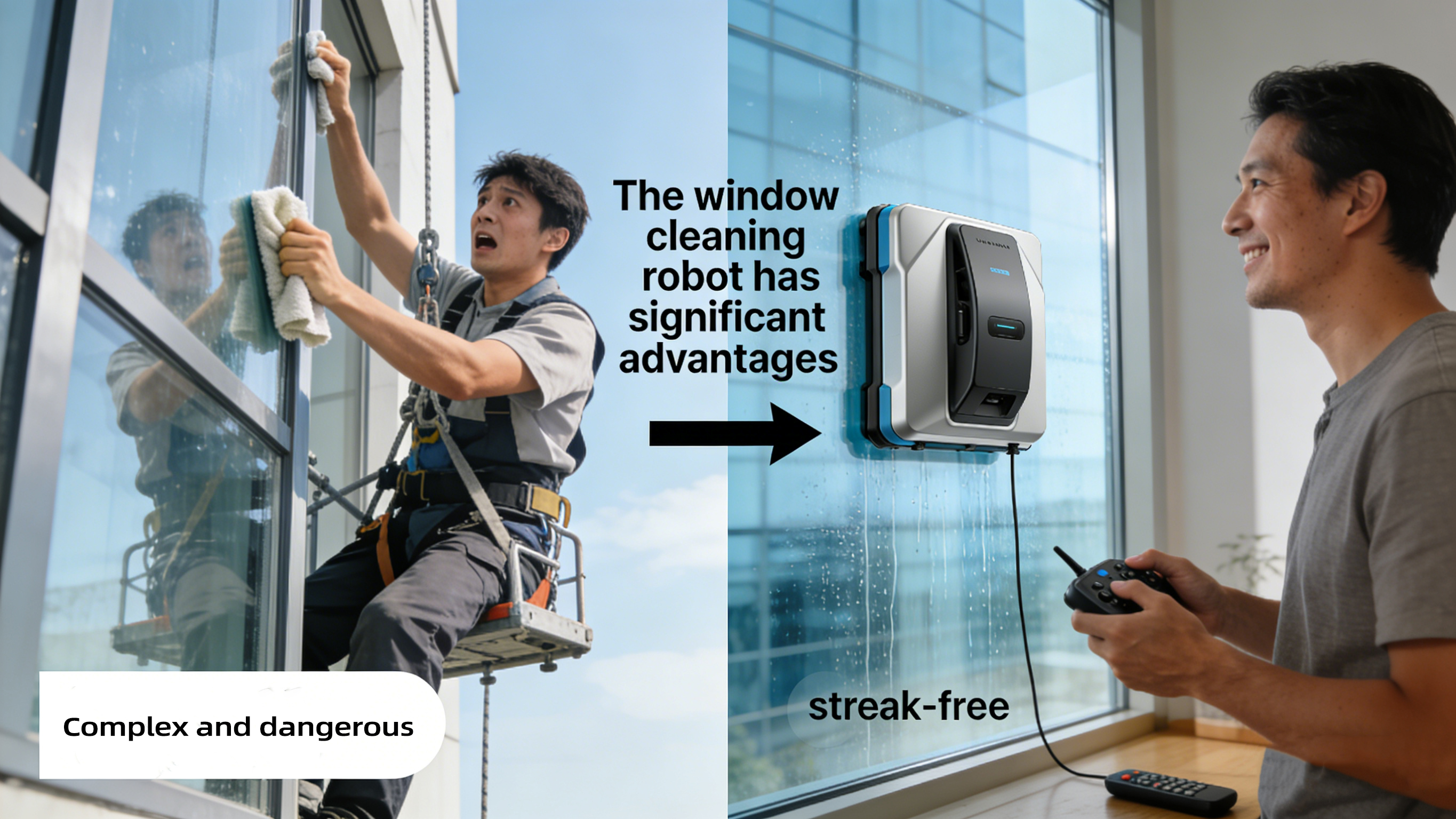
This is a question of convenience, safety, and time. If you have hard-to-reach windows, live in a multi-story home, or simply detest the chore of window cleaning, the answer is a resounding yes. The time and physical labor saved can be immense. Instead of spending a weekend teetering on a ladder, you can deploy a robot to do the dangerous work for you.
Furthermore, for elderly individuals or those with mobility issues, a window cleaning robot is not just a convenience—it's an enabling technology that allows them to maintain their home safely. While the initial cost can be high, when you factor in the cost of hiring professional window cleaners over several years or the safety risk of DIY cleaning, the investment often proves to be very worthwhile. They deliver a consistent, streak-free clean that is difficult to achieve by hand.
Frequently Asked Questions (FAQ)
Here are answers to some of the most common questions potential buyers have about automated window cleaners.
Do window cleaning robots clean corners perfectly?
Square-shaped robots come very close to perfect, cleaning about 99% of the corners. Due to their physical design, there may still be a minuscule area they can't touch. Round robots are less effective in corners. For most users, the performance of a good square robot is more than sufficient and eliminates the vast majority of manual labor.
Can they be used on frameless windows or shower doors?
Yes, but only if the model is specifically designed for it. You must look for robots with advanced, pressure-sensitive or laser-based edge detection sensors that can identify the end of the glass without a frame. Using a basic model on a frameless surface will cause it to lose suction and fall.
How long does it take to clean a window?
This depends on the window size and the robot's speed. As a general rule, a robot can clean one square meter in about 2 to 4 minutes. A standard-sized residential window might take 5-10 minutes. A large sliding glass door could take 15-20 minutes.
What kind of cleaning solution should I use?
Always follow the manufacturer's recommendation. Many recommend using only distilled or demineralized water in models with automatic sprayers to prevent mineral buildup from clogging the nozzle. For models where you wet the pads, you can often use a small amount of the manufacturer's approved solution or a highly diluted, high-quality window cleaning fluid. Avoid using thick or soapy detergents, as they can cause streaks and damage the robot's components.
Your Final Checklist for Choosing a Window Cleaning Robot
You're now equipped with the knowledge to make a smart purchase. Before you buy, run through this final checklist to ensure the model you're considering is the right one for you.
Window Type: Are my windows mostly framed or frameless? Do I need a square or a round robot?
Power: Is a corded model with unlimited power better for me, or do I need the flexibility of a cordless one?
Safety: Does it have both a UPS backup battery and a strong safety tether? (This is non-negotiable).
Navigation: Does it feature AI-powered path planning for efficient, full coverage?
Cleaning Method: Does it have an effective system like an ultrasonic spray and/or vibrating pads?
Control: Am I happy with a simple remote, or do I want the advanced features of a smartphone app?
Noise: Have I checked the decibel rating to ensure it won't be overly disruptive?
By carefully considering these points, you can confidently choose a window cleaning robot that will save you time, keep you safe, and leave you with beautifully clear views for years to come.
window cleaning robot, how to choose a window cleaning robot, automated window cleaner, robotic window washer, best window cleaning robot, window cleaning robot review, window cleaning robot for large windows, square vs round window robot, window robot safety, are window cleaning robots worth it