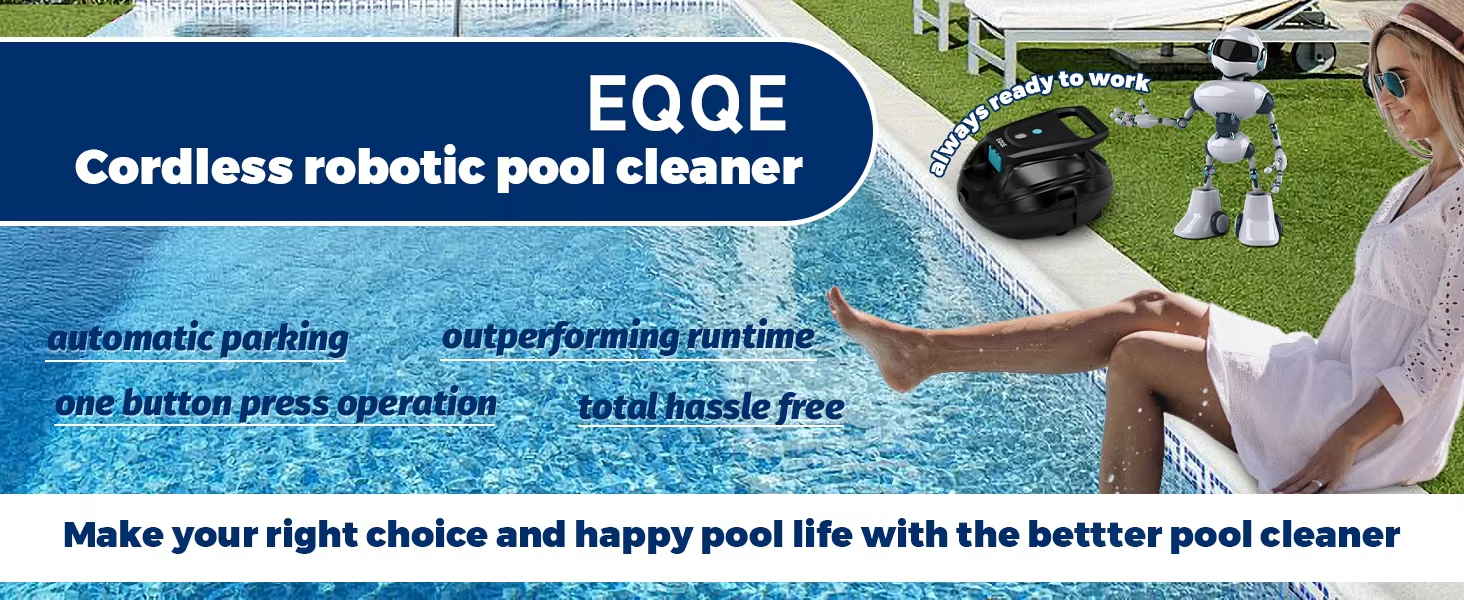
Maintaining a crystal-clear inground swimming pool is often celebrated as the ultimate backyard luxury. However, any homeowner who actually manages a pool knows the reality of seasonal maintenance is a physically demanding chore. Pushing a traditional manual vacuum head attached to a long, clumsy hose across an eight-foot deep end is an exhausting routine. Connecting that hose to your skimmer port robs your primary filtration system of its natural water pressure. This manual sweeping method regularly causes immense frustration. The moment your brush touches the floor, lightweight debris billsows upward into a cloud, suspending itself in the water column and rendering your effort entirely useless.
![7]()
To permanently eliminate this physical strain and achieve pristine water clarity, transitioning to an independent, autonomous pool cleaning robot is the most practical solution. Operating entirely outside your pool's primary plumbing infrastructure, these advanced machines use localized suction, marine-grade gyroscopes, and active high-speed brushing to clean your floor and walls in a single cycle. However, dropping a pool robot into the water incorrectly can trap air pockets, causing the machine to float helplessly or leave behind hazy streaks. This comprehensive guide delivers a step-by-step operating blueprint to ensure flawless underwater deployment. You will learn the fluid dynamics of air purging, how to select micron filter panels to capture microscopic algae, and how to pair your pool robot with a high-suction cordless stick vacuum to keep your dry deck environment equally spotless.
Quick Answer
To vacuum an inground pool with a robotic cleaner, submerge the unit sideways or upside down to purge all trapped air from the chassis casing, release the floating cable completely, and gently lower it to the pool floor. Select your optimized cleaning profile and activate the power transformer. Once finished, retrieve the machine using the dedicated float line or retrieval hook, never by pulling directly on the power cable.
Key Takeaways
The Air Purge Requirement: You must submerge and tilt the pool robot underwater until all air bubbles escape the shroud casing, or internal buoyancy will lift the drive tracks off the pool floor.
Filter Micron Optimization: Use standard mesh baskets for heavy autumn leaf loads, but swap in 20-micron pleated cartridges to permanently trap fine sand, pollen, and dead algae cells.
Tether Cord Torsion Physics: Always lay out corded power cables completely flat under direct sunlight before deployment to remove plastic coil memory and prevent underwater twisting loops.
The Cordless Deck Companion: Submersible robots manage underwater boundaries perfectly, but clearing loose sand, dry leaves, and cobwebs from patio enclosures and dry deck tiles requires a high-suction cordless stick vacuum.
Chemical Treatment Isolation: Never run your robotic pool cleaner during an aggressive chemical shock or high chlorine dosing treatment to protect the delicate rubber tracking seals from premature oxidation.
1. Underwater Fluid Dynamics: Purging Air to Guarantee Track Traction
A robotic pool cleaner relies on a deliberate balance of weight, buoyancy, and downward water thrust to traverse a vertical swimming pool wall or floor smoothly. Unlike a traditional household vacuum that pushes against solid ground under normal atmospheric conditions, a pool robot operates in a dense fluid medium.
Any failure to manage internal air pockets before starting a cleaning cycle will immediately disrupt the machine's balancing systems, causing it to fail.
[Trapped Air Inside Shroud] ---> Upward Buoyancy Lift ---> Tracks Lose Friction Grip ---> Wheels Spin out
|
[Tracks Lock onto Floor] <--- Total Water Displacement <--- Sideways Purge Roll <-----------+
The Buoyancy Battle: When you pick up a dry pool robot and look at its chassis, you are looking at a complex plastic housing with multiple internal storage compartments, motor blocks, and filter chambers. If you drop the machine straight down into the water, a massive volume of air remains trapped inside the top of the impeller shroud. This trapped air creates an immediate upward lifting force, counteracting the robot's engineered submerged weight.
Track Slip and Spin Out: If the machine attempts to drive while air is trapped inside its casing, the upward buoyancy lifts its heavy rubber tracking wheels slightly off the pool liner. The wheels lose their mechanical friction bite against the slick gunite, vinyl, or mosaic tile finish. The tracks spin out in place, the internal gyroscope miscalculates its spatial mapping coordinates, and the robot tips over onto its side.
The Sideways Purge Technique: To eliminate this internal air pocket, you must execute a structural purge roll during every single deployment. Lower the robot into the water by its primary handle, submerging it completely beneath the surface line. Turn the machine sideways, then tilt it fully upside down, shaking it gently back and forth. You will see a massive rush of large air bubbles escape through the bottom intake slots and top impeller vents. Once the bubbles stop emerging, the chassis is entirely filled with water, allowing the drive tracks to lock onto the floor with 100% traction.
2. The Step-by-Step Deployment Protocol for Inground Pools
Operating a high-end pool robot requires following a disciplined procedural sequence. Hurrying through deployment or tossing the hardware into the shallow end like a pool toy can tangle the power lines, crack the internal filter basket latches, or damage the electronic transformer box.
Implement this exact step-by-step operating sequence during every pool maintenance session to guarantee maximum cleaning coverage and preserve your hardware:
1.Position the Power Supply Control Box:2 Minutes。
Place the low-voltage power supply transformer box on a dry, flat surface at a minimum distance of 11 feet (approx. 3.5 meters) back from the edge of the pool water. Do not plug the transformer into the outdoor GFCI wall outlet yet, and ensure the control box is kept away from standing puddles.
2.Purge and Sink the Robot:3 Minutes。
Carry the pool robot to the center point of the pool's length. Submerge the unit entirely and execute the sideways rolling purge protocol to release all trapped air. Once the air bubbles stop, gently guide the water-filled robot downward until it rests flat on the shallow-end pool floor.
3.Feed the Cord and Adjust the Slack:2 Minutes。
Uncoil the floating power cable completely. Throw only the required length of cord into the water pool body—enough to allow the robot to reach the absolute furthest deep-end corner plus an extra 4 feet of safety slack. Leave the remaining dry cord slack resting neatly on the pool deck.
4.Connect and Select the Cleaning Cycle:1 Minute。
Plug the floating cable's proprietary water-sealed pinned plug into the front of the power supply box, twisting the plastic collar tightly to lock it. Plug the main transformer line into your GFCI wall outlet, select your optimized cleaning profile (e.g., Floor Only vs. Intensive Wall Scrub), and press the "Start" button.
3. Micron Ratings Explained: Matching Your Filter Box to the Grime Profile
A common cause of frustration among new pool robot owners is running a machine for a full three-hour cycle, only to notice that the pool water remains hazy or looks like fine dust is floating across the floor. This issue is rarely caused by low motor suction.
![8]()
Instead, it is a structural filtration mismatch, as different types of seasonal debris require completely different filter pore sizes.
Filter Mesh vs. Pleated Cartridges
Matching your pool robot's internal filtration configuration to the specific debris profile currently contaminating your water is the only way to achieve crystal-clear water clarity:
Filter Variant Style | Macro-Mesh Primary Filter Netting | Pleated Cellulose Ultra-Fine Cartridges |
Pore Micro-Size Rating | 100 to 150 Microns | 20 Microns (Ultra-Fine) |
Target Contaminants | Large autumn leaves, pine needles, acorns, bugs. | Fine silica sand, airborne pollen, dead algae. |
Water Flow Resistance | Extremely low (Allows maximum water pump speed). | High (Pores quickly fill with fine mud). |
Seasonal Matching | Best for early spring opening and heavy autumn falls. | Best for mid-summer maintenance and post-shock care. |
Maintenance Profile | Simple (Rinses clean with a garden hose in 10s). | Intensive (Requires deep pleat flushing and drying). |
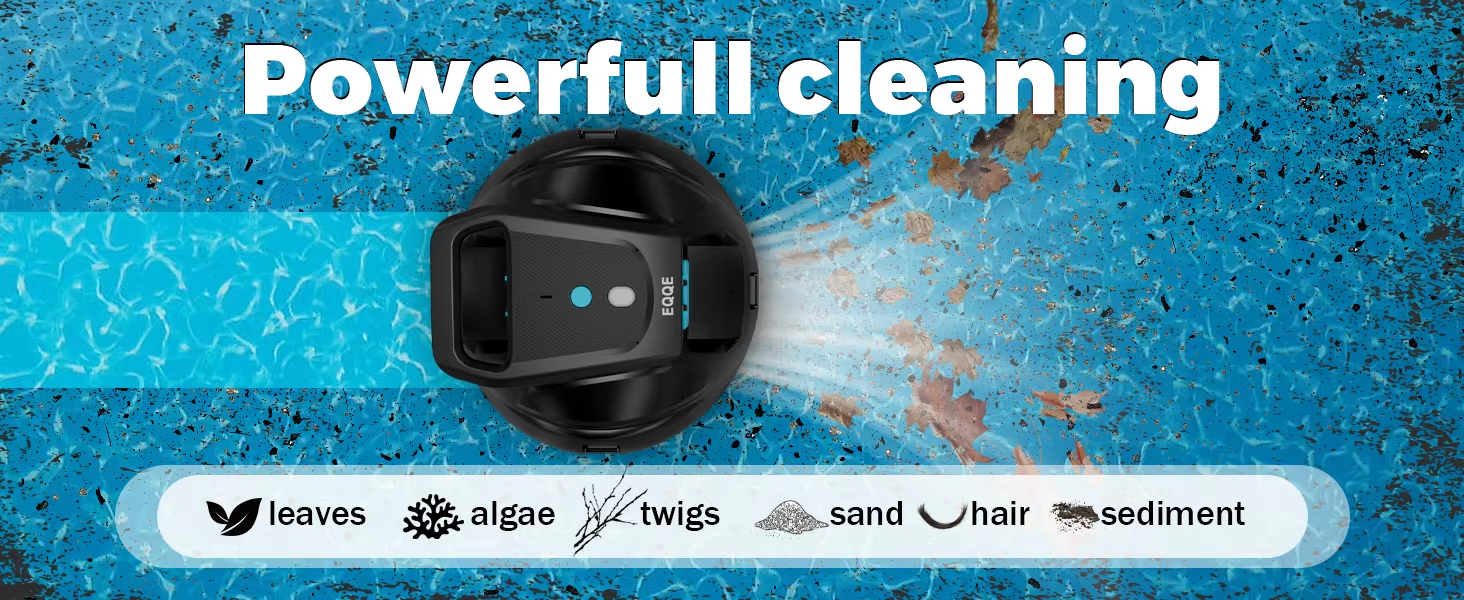
The Macro-Mesh Leaf Basket: Standard mesh filter baskets feature large pore sizes ranging from 100 to 150 microns. While these large openings are fantastic at allowing water to flow through at maximum velocity to capture heavy organic items like oak leaves or twigs, they are completely useless against fine dirt. Microscopic particles like airborne tree pollen or silt pass straight through the wide mesh pores and get blown right back out of the top exhaust vent, clouding your pool.
The 20-Micron Pleated Advantage: To permanently capture fine sand, red silt, and the powdery residue left behind after shocking an algae bloom, you must swap out the standard mesh walls for ultra-fine, pleated cellulose filter panels. These high-density fabric panels trap microscopic particles down to 2 microns. Because this weave is incredibly tight, it strips fine haze out of the water instantly, giving your inground pool a professional, sparkling look.
4. Cordless Lithium vs. Floating Tethers: Evaluating Underwater Power Systems
The pool robotics industry has split into two competing design frameworks regarding power delivery: traditional corded units powered by a floating tether and low-voltage transformer box, and next-generation cordless pool robots powered by internal rechargeable lithium battery packs.
Understanding the mechanical engineering trade-offs of both systems allows you to choose the best configuration for your specific pool layout.
Traditional Floating Tethers: Corded pool robots connect directly to a continuous AC wall transformer via an insulated, buoyant power cord. The primary mechanical benefit of this system is unlimited operational runtime. The machine can run intense, four-hour deep cleaning cycles without slowing down or needing a recharge. However, the physical cable is constantly prone to building up torsion memory under the hot sun, leading to twisting knots that can shorten the robot's cleaning path and cause it to miss patches of the pool.
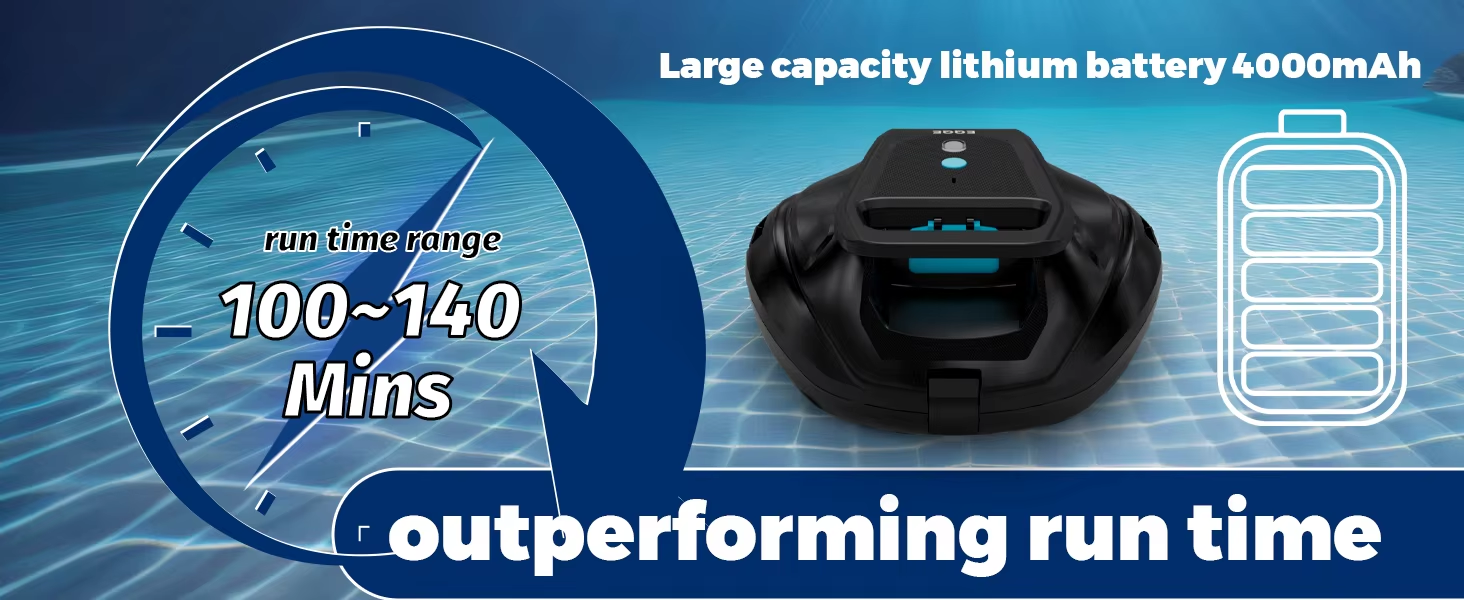
Next-Gen Cordless Lithium Power: Cordless pool robots remove the external tether completely, storing energy inside a sealed, under-chassis lithium-ion battery pack. This cordless design provides a massive operational advantage: zero cord tangling. The machine moves through complex freeform pools, around diving blocks, and up steps without any risk of binding. The engineering trade-off, however, centers around weight and retrieval. Adding a large battery pack increases the machine's dead weight, requiring heavy-duty hydraulic pumps to lift it. Furthermore, once the battery drains, you must use a long physical retrieval hook to pull the dead machine up from the deep end of the pool.
5. Complete Pool Maintenance: Coordinating Pool Robots with Cordless Stick Vacuums
A robotic pool cleaner is a highly focused, submersible single-environment appliance that is engineered to work exclusively beneath the water line. It cannot clean the dry concrete pool deck tiles, and it cannot reach up to clear out the dry leaves, spiderwebs, and windblown sand that accumulate across your surrounding patio spaces.
![9]()
Attempting to run a pool robot while your surrounding deck is dirty is highly inefficient, as foot traffic and wind gusts will continuously push dry sand and leaves straight back into your clean water.
[The Backyard Maintenance Plan]
|
+---> 1. High-Suction Cordless Stick Vacuum ---> Clears Dry Patio Deck Tiles & Screen Enclosures
+---> 2. Submersible Robotic Pool Vacuum ---> Clears Sub-Surface Floor, Walls, & Waterline Tiles
To maintain a pristine pool area, you must combine your underwater robotics with a high-performance, outdoor-capable cordless stick vacuum. Before deploying your pool robot, attach a wide multi-surface floor head or a stiff dusting brush to your cordless stick vacuum. Run the stick vacuum across your dry patio tiles, pool enclosure frames, and outdoor lounge furniture to instantly remove loose sand, dried grass clippings, and spider webs using high-velocity suction.
Clearing this loose debris from your dry surfaces ensures that pool visitors won't track sand back into the water on their feet. Once your dry deck environment is clean, drop your pool robot into the water to polish the sub-surface floor and scrub the waterline tile marks, creating a spotless indoor-outdoor living space.
6. Safe Retrieval and Post-Clean Sanitation Protocols
The cleaning cycle is not truly complete when the robot finishes its route and parks along the pool wall. How you extract, drain, and clean your machine directly dictates its long-term operational lifespan.
Improper extraction techniques can place severe stress on the internal waterproof seals, causing water leakage that can quickly burn out the drive motors.
[Finished Cycle] ---> Use Float Line to Pull to Surface ---> Drain Water Weight over Ledge ---> Discard Silt Away from Pool
|
[Motor Seals Rip Out] <--- Lift Direct via Power Cable <--- Extreme Load Strain <-----------------------+
The Cable Pull Disaster: The most common operational mistake pool owners make is grabbing the floating power cable and hauling the heavy robot up out of the deep end by the wire alone. A water-filled pool robot can weigh upwards of 35 pounds (approx. 16 kg). Pulling that heavy mass vertically by the cord places immense stress on the internal strain-relief wiring seals. Over time, this pulling tears open the rubber gaskets surrounding the motor cylinder, allowing chlorinated water to seep into the electrical motor block and short-circuit the machine.
The Ledge Drain Protocol: Always pull the robot gently to the surface using the dedicated floating line or retrieval hook until you can firmly grasp the machine's integrated plastic handle. Lift the robot halfway out of the water and hold it steady over the pool ledge for 30 to 45 seconds. Modern pool robots feature rapid-drain check-valves that empty the heavy internal water weight back into the pool within seconds. Once the water drains out, you can safely lift the lightweight machine onto dry land.
The Anti-Blinding Rinse Rule: When cleaning the internal filter basket, never use a high-pressure power washer nozzle, as high-velocity water can instantly tear the fine, 20-micron pleated synthetic fibers. Use a low-pressure garden hose spray, directing the water path from the clean outside of the filter toward the dirty inside. This pushes trapped silt out of the fabric pleats cleanly, preventing the mesh from blinding and ensuring maximum suction performance during your next cleaning run.
FAQ: Advanced Submersible Maintenance & Diagnostics
Q: Why does my robotic pool vacuum consistently get stuck or high-centered on the main drain cover at the bottom of the deep end?
A: A pool robot gets high-centered because of the geometric shape of raised hydrostatic relief valves or main drain grates. When the flat center belly of the robot slides over a dome-shaped drain cover, its drive tracks lose contact with the flat floor, leaving the machine stuck with its wheels spinning in the air. To resolve this structural issue, you can install a universal smooth transition ring (such as a main drain guard kit) over your pool drain, creating a gentle slope that allows the robot's suspension tracks to climb over the obstruction easily.
Q: Can I safely leave my robotic cleaner inside the pool water during a shocking chemical treatment or high chlorine dosing?
A: Absolutely not. You must always remove your robotic pool cleaner from the water before adding chemical shock, algaecides, or large doses of liquid chlorine. A fresh chemical shock can spike local chlorine levels above 10 parts per million ($PPM$). This highly concentrated chemical environment causes rapid oxidation of rubber drive tracks, degrades plastic intake flaps, and hardens the delicate silicone drive-shaft seals. Always wait until your chlorine levels drop back down below 3 PPM before deploying your pool robot.
Q: How does a pool robot calculate its cleaning path without a clear view of the sky or GPS tracking lines?
A: Submersible pool robots cannot use GPS, as high-frequency satellite radio waves cannot penetrate water. Instead, they rely on advanced marine dead-reckoning navigation systems. The machine's internal processor combines a three-axis digital gyroscope with a precise accelerometer to monitor changes in direction and pitch angles. As the robot moves, the computer maps out the lengths of your pool floor and walls by recording driving runtimes between physical bumper reflections, creating an optimized cleaning grid path automatically.
Q: What causes a pool vacuum to stop climbing the vertical walls to scrub the waterline tile markers?
A: A sudden loss of wall-climbing performance is usually caused by an internal impeller clog or a buildup of slick algae biofilm along the pool walls. If loose palm fronds, hair, or small twigs slip past the filter basket, they can wrap around the top exhaust impeller fan shaft, reducing the machine's downward water thrust. Without this powerful downward thrust to hold the machine against the vertical wall, gravity pulls it down. Check for impeller obstructions and brush away any slick algae layers to restore proper wall-climbing traction.
Q: Is it safe to run a robotic pool vacuum while real humans or family pets are actively swimming inside the water?
A: Yes, it is entirely safe. Robotic pool cleaners pull power from a specialized step-down safety transformer box that converts standard 110V or 220V household wall current into a completely safe, low-voltage 24-volt Direct Current (DC) feed before sending it down the floating line. This low-voltage architecture eliminates any risk of dangerous electrical shocks in the water. However, to prevent accidental cable entanglements, it is still best practice to clear the pool of swimmers during an active cleaning run.
Q: Why is my pool robot floating upside down on the surface of the water like a beach ball?
A: A pool robot that floats upside down is suffering from a catastrophic air-containment issue or an internal handle flotation foam imbalance. Modern pool robots integrate precise air chambers and balanced foam cell inserts inside their primary handles to help them transition from horizontal driving to vertical wall climbing. If you skip the mandatory air-purge rolling step during deployment, a massive volume of air remains trapped inside the lower chassis, turning the machine upside down as gravity forces the heavy motor block upward.
Conclusion
Vacuuming an inground pool with an autonomous robotic cleaner is an exceptionally efficient, labor-saving upgrade that replaces manual sweeping with engineered precision. To maximize your investment, you must move away from rushed deployment habits and respect the basic laws of underwater fluid dynamics. Always execute a sideways rolling purge pass during submersion to eliminate trapped air pockets and ensure complete drive track traction. Be sure to match your internal filter panels to your seasonal debris profile, utilizing dense 20-micron pleated cartridges to capture fine pollen and dead algae before they can cloud your water. By combining this automated underwater maintenance with a high-suction cordless stick vacuum to keep your dry deck surfaces clean, you can enjoy a spotless backyard oasis all year round.
About Lincinco
Lincinco (Dongguan Lingxin Intelligent Technology Co., Ltd.) is a premier global manufacturer specializing in high-performance smart appliances and fluid-dynamic home robotics. Operating from our state-of-the-art 50,000m² industrial facility, our company houses 135 high-precision injection molding machines and a dedicated 65-person R&D engineering team holding over 100 international patents. As a primary OEM/ODM development partner for leading brands like Xiaomi and Electrolux, Lincinco runs a strict 20-stage quality inspection process inside our automated testing laboratories. We specialize in perfecting high-efficiency brushless digital motors, whole-machine structural vacuum sealing configurations, and complex multi-environment fluid dynamics, ensuring that every vacuum, smart window cleaner, and automated consumer device delivers optimized power-to-runtime performance. At Lincinco, we engineer the industrial precision needed to simplify modern household maintenance.