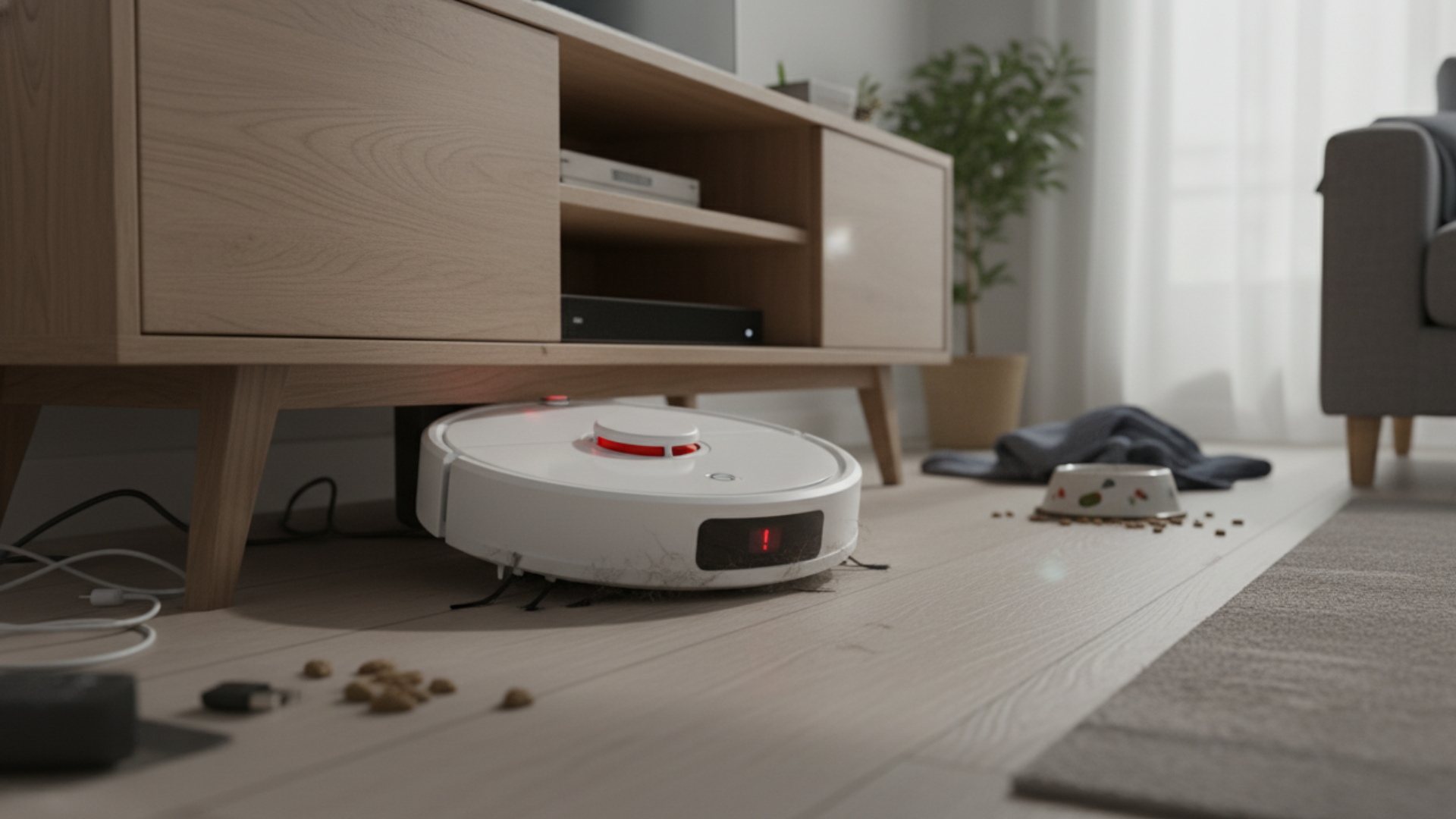
Why Is My Robot Vacuum Going in Circles? Causes and Fixes
Views: 329 Author: Site Editor Publish Time: 2026-05-24 Origin: Site
You expect your automated cleaner to navigate your home in neat, efficient lines, but instead, it is performing an endless spin routine in the middle of your living room. A robot vacuum goes in circles primarily because of a stuck bumper sensor, dirty cliff sensors, a jammed drive wheel, or a temporary software mapping glitch. This article will explore the mechanical and software-related causes of this erratic behavior, explain how specific sensors impact navigation, and provide a comprehensive troubleshooting guide to get your robotic cleaner back on track.
Why is my robot vacuum spinning in circles instead of cleaning?
Your robot vacuum is spinning in circles because its internal sensors or wheels are sending conflicting data to its processor. This erratic behavior is typically caused by debris wedged in the bumper, dirty drop sensors, tangled hair in the drive wheels, or a corrupted digital floor map.
When a robotic vacuum operates, it relies on a continuous stream of data from its optical and mechanical sensors to navigate safely. If a single sensor is compromised, the robot’s algorithm enters a defensive evasion loop. It spins in place attempting to find a clear path that its confused sensors say does not exist.
Understanding this behavior requires breaking down the robot's anatomy. The issue almost always stems from one of three distinct categories:
Mechanical Blockages: Physical debris restricting the movement of the bumper or the drive wheels.
Optical Blindness: Dust or dark flooring blinding the infrared sensors beneath the unit.
Software Confusion: Firmware glitches causing the machine to lose its spatial orientation.
How do dirty or stuck bumper sensors affect robot navigation?
A stuck bumper sensor tricks the robot vacuum into believing it is constantly driving into a solid wall. To avoid this imaginary obstacle, the robot will continuously turn away from the perceived impact, resulting in a tight, endless circular motion.
The front bumper acts as the machine's primary physical obstacle detector. When the bumper hits a wall or piece of furniture, it depresses a small internal tactile switch. This signals the robot to stop, turn, and proceed in a new direction.
If dust, pet hair, or sticky debris wedges the bumper inward, that internal switch remains permanently depressed. The robot's logic dictates that it must rotate to find an open path. Because the bumper never releases, the robot assumes it is trapped in a corner and continues rotating indefinitely.
Can blocked cliff sensors cause erratic spinning?
Yes, blocked cliff sensors frequently cause erratic spinning. If dust, pet dander, or dark-colored flooring covers these infrared sensors, the robot believes it is constantly on the edge of a dangerous drop, causing it to spin defensively to avoid falling.
Cliff sensors are small optical lenses located beneath the front edge of the robot. They continuously bounce infrared light off the floor to detect staircases and steep drops.
When heavy debris coats these optical lenses, the infrared light cannot reflect back to the receiver. The robot interprets this missing signal as a deep void. Consequently, it immediately reverses and turns to save itself. If multiple sensors are dirty, the robot will spin in place, completely unable to find solid ground to move forward on.
What mechanical wheel issues lead to circular movement?
If one of the main drive wheels is jammed with hair, string, or debris, it will rotate slower than the opposite wheel. This unequal power distribution forces the robot vacuum to pivot heavily around the jammed wheel, creating a tight circular path.
Robot vacuums utilize a differential drive system. By spinning the left and right wheels at the exact same speed, the machine moves in a perfectly straight line. Steering is achieved by altering the speed of one wheel relative to the other.
If a physical obstruction restricts an axle, the robot acts like a rowboat with only one paddle in the water. The motor continues to push power, but the physical restriction forces the chassis into a spin.
Left Wheel Status
Right Wheel Status
Resulting Robot Movement
Normal Rotation
Normal Rotation
Moves forward in a straight line
Jammed / Slow
Normal Rotation
Spins heavily to the left
Normal Rotation
Jammed / Slow
Spins heavily to the right
How do software glitches and mapping errors disrupt cleaning paths?
Software glitches disrupt cleaning paths when the robot's internal gyroscope or digital floor map becomes corrupted. Without accurate spatial orientation, the navigation algorithm fails, causing the robot to spin in place as it desperately attempts to recalibrate its physical location.
Modern smart vacuums rely on complex visual mapping, LiDAR, and internal gyroscopes to track their exact coordinates within a room. Occasionally, a firmware error, a dead battery mid-cycle, or a sudden change in the room's layout can severely disorient the operating system.
When the main processor cannot reconcile its current sensor data with its saved digital map, it initiates a localized spinning maneuver. This allows the top-mounted laser or camera to scan the environment 360 degrees to re-establish its coordinates. If calibration fails due to a software freeze, the spinning loop continues until the unit shuts down.
How can I fix a robot vacuum that keeps going in circles?
You can fix a spinning robot vacuum by physically cleaning the front bumper, wiping the bottom cliff sensors with a microfiber cloth, removing hair tangles from the drive wheel axles, and performing a hard system reset to clear digital mapping errors.
Resolving this navigational error usually requires less than five minutes of basic physical maintenance. Follow this systematic approach to eliminate the most common hardware and software culprits:
Dislodge Bumper Debris: Firmly tap the front bumper multiple times around its entire perimeter. This action dislodges hidden dust or debris causing the internal tactile switch to stick.
Clean Optical Lenses: Turn the robot over and gently wipe the cliff and tracking sensors with a clean, dry microfiber cloth. Avoid using harsh liquid chemicals.
Clear Wheel Axles: Press down on both main drive wheels to ensure they spring back up smoothly. Use a tool to cut and remove any visible string or pet hair wrapped tightly around the wheel axles.
Perform a Hard Reboot: Hold the power button to shut the unit down completely. Wait exactly one minute, and restart it to clear internal memory glitches and force the map to reload.
Conclusion
A robot vacuum performing an endless circle dance is rarely a sign of a fatal hardware failure. Instead, it is almost always a symptom of a confused navigation system caused by dirty cliff sensors, a stuck front bumper, a jammed drive wheel, or a minor software glitch. By understanding how the machine's differential drive and optical sensors dictate its movement, you can quickly diagnose and resolve the issue. To ensure efficient, straight-line navigation, maintain a weekly cleaning schedule for your robot's exterior sensors and undercarriage components.
Upgrade Your Supply Chain with Reliable Automation
Consistent, reliable navigation begins with superior manufacturing. Automated vacuums that frequently suffer from stuck bumpers and failing sensors are often the result of poor factory assembly and low-grade components.
If you are looking to source highly reliable smart home appliances, Lincincois an industry-leading intelligent manufacturer specializing in high-performance smart cleaning robots. Operating a massive 50,000-square-meter facility with a dedicated R&D team and rigorous quality control protocols, we precision-build OEM and ODM solutions that eliminate common navigational failures. From advanced Laser Robot Vacuums equipped with aerospace-grade LiDAR to fully automated Self-Cleaning base stations, Lincinco delivers customizable hardware built for durability. Partner with Lincinco today to scale your private-label appliance brand with guaranteed supply chain excellence and flawless robotic navigation.
A robotic pool cleaner must have strong wall-climbing ability, a firm scrubbing brush, and smart navigation that targets the waterline to effectively remove stubborn stains caused by organic residue and calcium scale. Manual scrubbing and pressure-side cleaners often fall short, so a purpose-built robotic model with dedicated waterline cleaning is the most reliable solution. Regular maintenance, proper water chemistry, and consistent cleaning schedules are also essential to prevent buildup and keep results lasting. Read More
This article explains the engineering behind robotic pool cleaners that can climb vertical walls, highlighting the use of multiple motors, advanced suction systems, and intelligent navigation to maintain adhesion and ensure thorough cleaning. It emphasizes the practical benefits of this technology, such as eliminating waterline stains and reducing manual maintenance, while also addressing the design challenges of balancing weight, power, and sensor accuracy. Read More